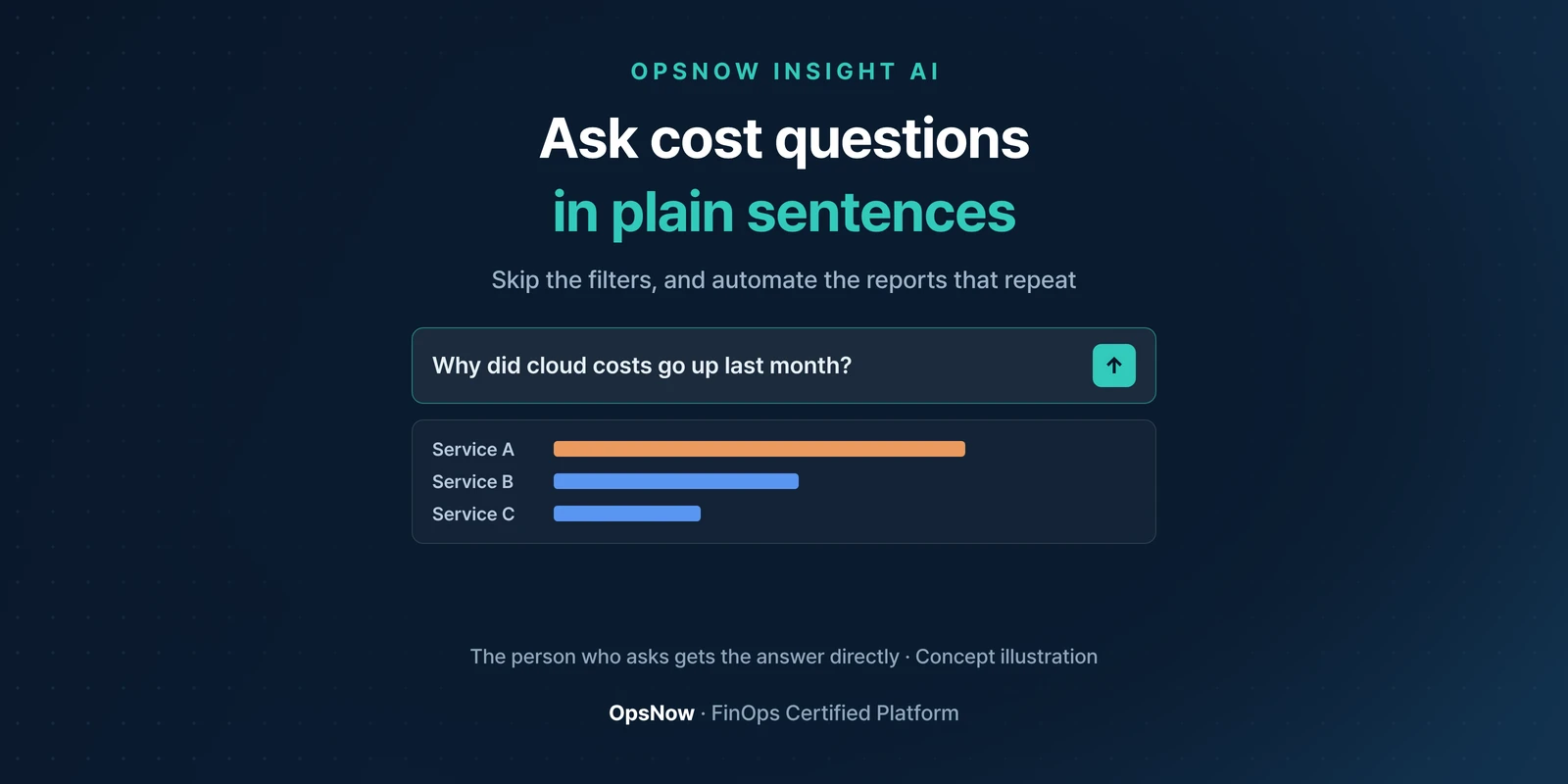
■ Problem: A cost question fits in one line, but answering it means setting date and service filters in the console and copying the numbers into a table. So every question lands on one FinOps lead.
■ Solution: Ask OpsNow Insight AI about costs in plain language, and move the reports that repeat every month to report automation.
■ Result: Instead of handing a question to the FinOps lead and waiting, the person who asked types the same sentence and checks the answer.
Thirty minutes before the Monday leadership meeting, the head of finance sent a message: "Why did cloud costs go up last month? Which service is behind it?" The FinOps lead opened the console, changed the date range, split costs by service and copied the numbers into a table. By the time the answer went out, the meeting had already started.
Cost questions are usually short. People ask how much costs grew, where they grew and how they compare with last month.
Building the answer is not. The people asking are in finance or leadership, while the FinOps lead is the one who knows which screen and which filters to use. So questions pile up on one person, and the same questions come back every month. That is how a FinOps lead's day fills up with writing answers.
OpsNow Insight AI takes questions about cost in natural language, analyzes them and answers. The head of finance's question doesn't need to be turned into menus and filters. You type the sentence as it is.
If the same question comes back every month, use report automation. The FinOps lead no longer has to rebuild the same table at the start of each month.
If you run on several clouds, costs need to sit in one place before you ask. OpsNow brings costs from five CSPs, AWS, Azure, GCP, OCI and Naver Cloud, into one place.
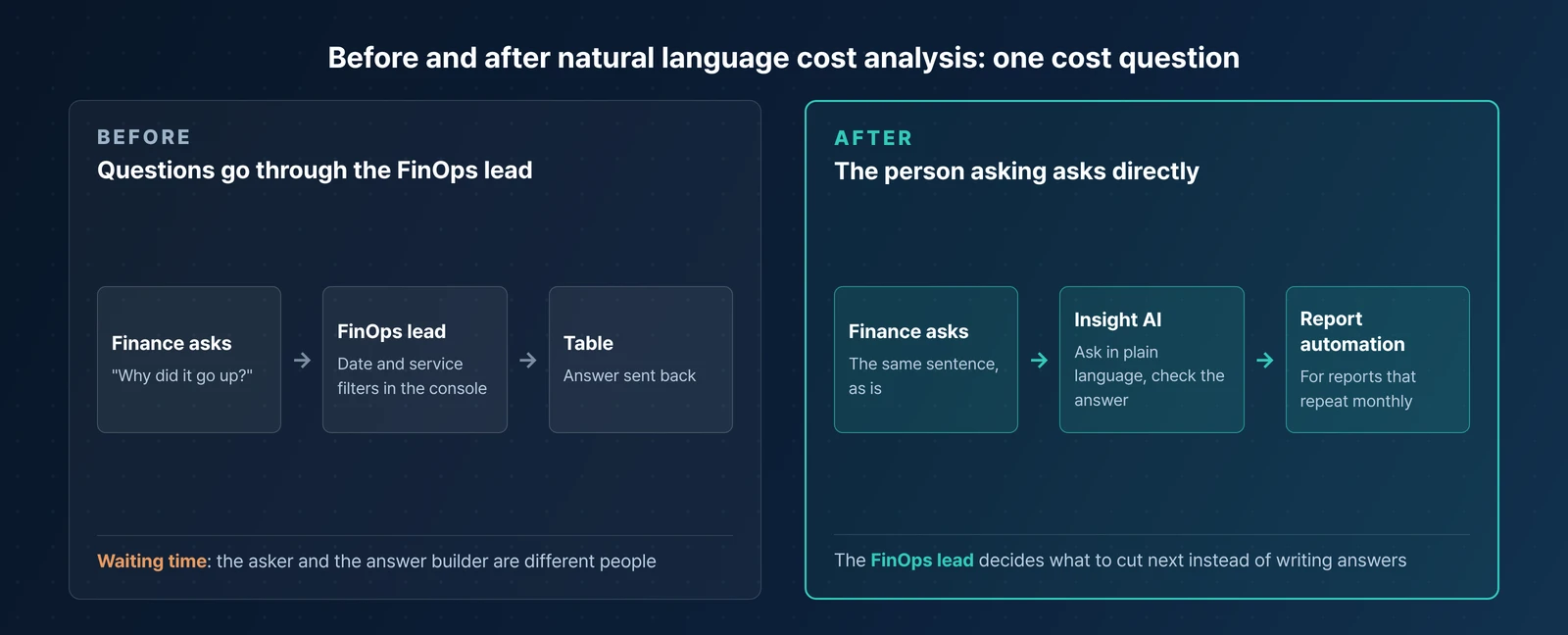
Before, a question travels through people. The head of finance asks, the FinOps lead sets filters in the console, organizes the result into a table and sends it back. The person asking and the person building the answer are different, so there is waiting time.
After, the person who asked asks directly. The head of finance types the same sentence into Insight AI and checks the answer. The FinOps lead spends that time deciding what to cut next instead of writing answers.
The more of these a question includes, the closer the answer is to something you can use right away.
Back to the question sent thirty minutes before the meeting. What the head of finance needed was not a faster FinOps lead. It was a place to ask the same sentence directly.
▶ Talk to OpsNow about your cloud costs
It is an OpsNow FinOps feature that analyzes and answers questions about cloud costs written in natural language. It also includes report automation.
Write it the way you would ask a colleague, and include the time range, what to compare against, and any service or account you care about. The clearer the scope, the more usable the answer.
For reports that repeat monthly, report automation is the better fit. It cuts down on rebuilding the same table every time.

■ Problem: A cost question fits in one line, but answering it means setting date and service filters in the console and copying the numbers into a table. So every question lands on one FinOps lead.
■ Solution: Ask OpsNow Insight AI about costs in plain language, and move the reports that repeat every month to report automation.
■ Result: Instead of handing a question to the FinOps lead and waiting, the person who asked types the same sentence and checks the answer.
Thirty minutes before the Monday leadership meeting, the head of finance sent a message: "Why did cloud costs go up last month? Which service is behind it?" The FinOps lead opened the console, changed the date range, split costs by service and copied the numbers into a table. By the time the answer went out, the meeting had already started.
Cost questions are usually short. People ask how much costs grew, where they grew and how they compare with last month.
Building the answer is not. The people asking are in finance or leadership, while the FinOps lead is the one who knows which screen and which filters to use. So questions pile up on one person, and the same questions come back every month. That is how a FinOps lead's day fills up with writing answers.
OpsNow Insight AI takes questions about cost in natural language, analyzes them and answers. The head of finance's question doesn't need to be turned into menus and filters. You type the sentence as it is.
If the same question comes back every month, use report automation. The FinOps lead no longer has to rebuild the same table at the start of each month.
If you run on several clouds, costs need to sit in one place before you ask. OpsNow brings costs from five CSPs, AWS, Azure, GCP, OCI and Naver Cloud, into one place.
Before, a question travels through people. The head of finance asks, the FinOps lead sets filters in the console, organizes the result into a table and sends it back. The person asking and the person building the answer are different, so there is waiting time.
After, the person who asked asks directly. The head of finance types the same sentence into Insight AI and checks the answer. The FinOps lead spends that time deciding what to cut next instead of writing answers.

The more of these a question includes, the closer the answer is to something you can use right away.
Back to the question sent thirty minutes before the meeting. What the head of finance needed was not a faster FinOps lead. It was a place to ask the same sentence directly.
▶ Talk to OpsNow about your cloud costs
It is an OpsNow FinOps feature that analyzes and answers questions about cloud costs written in natural language. It also includes report automation.
Write it the way you would ask a colleague, and include the time range, what to compare against, and any service or account you care about. The clearer the scope, the more usable the answer.
For reports that repeat monthly, report automation is the better fit. It cuts down on rebuilding the same table every time.

■ Problem: A cost question fits in one line, but answering it means setting date and service filters in the console and copying the numbers into a table. So every question lands on one FinOps lead.
■ Solution: Ask OpsNow Insight AI about costs in plain language, and move the reports that repeat every month to report automation.
■ Result: Instead of handing a question to the FinOps lead and waiting, the person who asked types the same sentence and checks the answer.
Thirty minutes before the Monday leadership meeting, the head of finance sent a message: "Why did cloud costs go up last month? Which service is behind it?" The FinOps lead opened the console, changed the date range, split costs by service and copied the numbers into a table. By the time the answer went out, the meeting had already started.
Cost questions are usually short. People ask how much costs grew, where they grew and how they compare with last month.
Building the answer is not. The people asking are in finance or leadership, while the FinOps lead is the one who knows which screen and which filters to use. So questions pile up on one person, and the same questions come back every month. That is how a FinOps lead's day fills up with writing answers.
OpsNow Insight AI takes questions about cost in natural language, analyzes them and answers. The head of finance's question doesn't need to be turned into menus and filters. You type the sentence as it is.
If the same question comes back every month, use report automation. The FinOps lead no longer has to rebuild the same table at the start of each month.
If you run on several clouds, costs need to sit in one place before you ask. OpsNow brings costs from five CSPs, AWS, Azure, GCP, OCI and Naver Cloud, into one place.
Before, a question travels through people. The head of finance asks, the FinOps lead sets filters in the console, organizes the result into a table and sends it back. The person asking and the person building the answer are different, so there is waiting time.
After, the person who asked asks directly. The head of finance types the same sentence into Insight AI and checks the answer. The FinOps lead spends that time deciding what to cut next instead of writing answers.

The more of these a question includes, the closer the answer is to something you can use right away.
Back to the question sent thirty minutes before the meeting. What the head of finance needed was not a faster FinOps lead. It was a place to ask the same sentence directly.
▶ Talk to OpsNow about your cloud costs
It is an OpsNow FinOps feature that analyzes and answers questions about cloud costs written in natural language. It also includes report automation.
Write it the way you would ask a colleague, and include the time range, what to compare against, and any service or account you care about. The clearer the scope, the more usable the answer.
For reports that repeat monthly, report automation is the better fit. It cuts down on rebuilding the same table every time.